Today is the
 
Home
Our Congregation
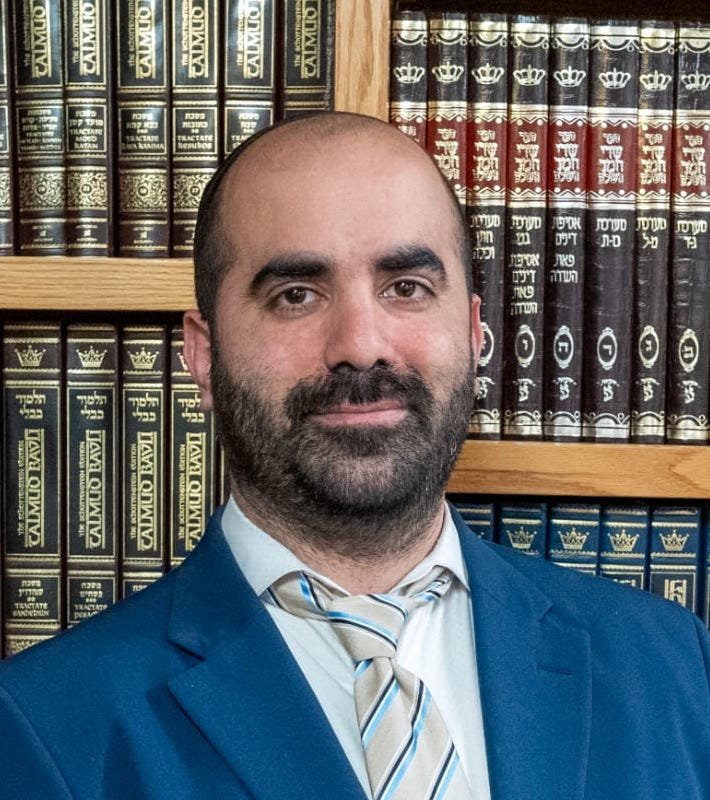
Our Rabbi
Our Community
Minyan Times
Classes
Donate / Purchase
Membership
Mailing List
Visit Us
Contact Us
Rabbi Bassous Podcasts
 
PDF  | Print |  E-mail

Welcome

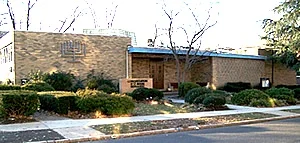
CEA buidling

We at Con­gre­ga­tion Etz Ahaim take pride in being one of the warmest, friendliest and most welcoming congregations in the community. Our doors are always wide open to members of the local Raritan Valley community, as well as to people living outside our area.
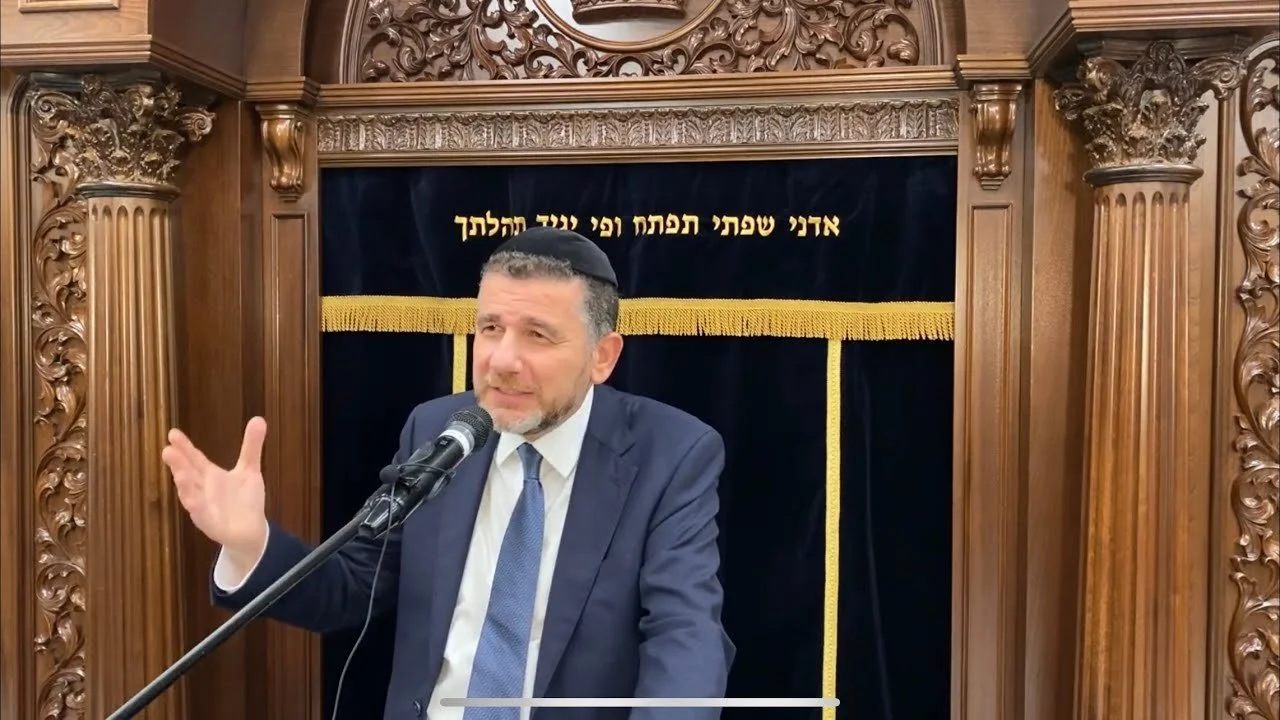
Respecting the beautiful customs and traditions of our faith, Congregation Etz Ahaim is an orthodox Sephardic synagogue. Morning and evening services are held daily. Child care and a children's program are offered on Shabbat and Yom Tov. All of our Shabbat services are followed by a bountiful sit-down kiddush, providing members with an opportunity to socialize, greet new worshipers, and informally meet our rabbi, Rabbi David Bassous.

Whether you are thinking of moving into the Highland Park/Edison area, or you live locally and are interested in finding out more about Congregation Etz Ahaim, we would love to assist you. Our kehilla is a very friendly place and we have a diverse membership, from old to young, and a variety of observance levels. One thing we all have in common is a desire to help newcomers feel welcome.


What is Shavuot and How Do We Celebrate it? PDF  | Print |  E-mail

Shavuot is the second of the three Regalim- Pilgrim Festivals. It is celebrated for two days outside Israel and for one day in Israel. The name Shavuot means weeks because it falls seven weeks after the second day of Pesach. It falls on the sixth day of Sivan.
 
Shavuot marks the day that the Torah was given to the Jewish people on Mount Sinai. That day was a very unusual one, with lightning, thunder sound of a shofar and the earth shaking. The first two commandments were heard directly from God when Moses came down from the Mountain, his face glowing, he relayed the remaining eight Commandments to the Children of Israel.

In Biblical times, Shavuot was at the time when the Jewish people harvested their wheat crop and their last grain of the season, and began harvesting their fruit crops.

An important part of the celebration of Shavuot in those times was the ceremony of bringing the "first fruits", or bikkurim, of the harvest to the Temple as an offering of thanks to God.
 
The bikkurim were carried in beautifully decorated baskets. Families would gather together to walk to Jerusalem and they would sing, dance and have music playing whilst they walked. When they arrived at the Temple, they gave their offerings to the priests who would bless them.
 
Different Names for Shavuot 

There are many different names for the festival of Shavuot. Some of them are:

  1. Zman Matan Torateinu ‘Festival of Giving of the Torah’
  2. Chag HaBikkurim ‘Festival of the First Fruits’
  3. Chag haKatzir ‘Harvest Festival’
  4. Chag Matan Torah ‘Festival of the giving of the Torah’
  5. In the Talmud, Shavuot is also called "Atzeret," which means "The Stoppage," a reference to the prohibition against work on this holiday.
How Do We Celebrate Shavuot?
  1. Greenery: On Shavuot we decorate our synagogues and homes with greenery, flowers and even fruits. This reminds us: 
    • That on the day the Jewish people received the Torah, Mount Sinai bloomed with flowers. 
    • Using greenery also reminds us of the harvests, another main idea of Shavuot.
    • According to the Midrash, Mount Sinai suddenly blossomed with flowers in anticipation of the giving of the Torah on its summit. Greenery also figures in the story of the baby Moses being found among the bulrushes in a watertight cradle (Ex. 2:3) when he was three months old. Moses was born on 7 Adar and placed in the Nile River on 6 Sivan, the same day he later brought the Jewish nation to Mount Sinai to receive the Torah.
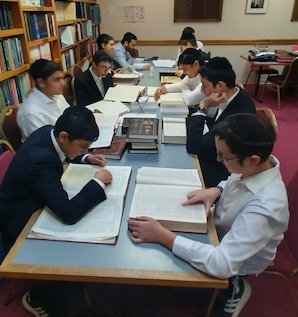
  2. Learning Torah All Night: Adults spend the eve of Shavuot staying up all night learning Torah. This custom is called Tikkun Leil Shavuot, because the Jews at Sinai were literally caught napping when God wanted to give them the Torah we rectify this by staying up all night learning Torah.
  3. Reading the Book of Ruth: Because
    • She was a convert and all the Jewish people converted at Har Sinai.
    • She was the great grandmother of King David. 
    • The story of Ruth took place during the 'Wheat Harvest' that culminates in Shavuot.
  4. We also read the Book of Tehillim: Because: King David was born and died on Shavuot.
  5. Eating Dairy Foods:
    • On Shavuot we eat dairy foods (foods made from milk). Because:
    • When they received the Torah all their pots and pans needed to be kashered and meat preparation had to wait.
    • This is based on a verse in Song of songs comparing Torah to milk and honey.
    • The gematria of chalav is 40 alluding to the 40 days and nights spent by Moshe on Mt. Sinai.
    • Moshe was born on the 7th of Iyar and was hidden three month later and was found by Bitya and given back to his mother to feed milk on this date of Shavuot.
  6. Reading Azharot which sets out the 613 Biblical commandments. Ashkenazim read Akdamot.
  7. Some Sephardim read a metaphorical ketubah between God and Israel.


Lag Ba'omer Customs and Reasons for Celebration PDF  | Print |  E-mail
The generally accepted practice is to treat Lag Ba'omer - the thirty-third day of the Omer as a day of celebration (Rema and Darchei Moshe Chapter 493, quoting Maharil) because:

  1. On Lag Ba’omer the talmidim of Rebbi Akiva stopped dying. (Mishna Brurah 493:MB8) 
  2. It is the yahrzeit of Rav Shimon bar Yochai, the author of the Zohar (Birkei Yosef; Chaye Odam, Klal 131:11; Aruch HaShulchan, Sedei Chemed, Kaf Hachaim). 
  3. On the day of his passing Rav Shimon bar Yochai's home was filled with a spiritual fire because before his death Rabbi Shimon revealed the Zohar - many secrets of Torah and Kabbala, which are compared to fire, and his coffin was surrounded by this spiritual fire. It is thus customary to light bonfires on Lag Ba’omer to symbolize the impact of his teachings. In Meron, the burial place of Rabbi Shimon bar Yochai and his son, Rabbi Elazar, hundreds of thousands of Jews gather throughout the night and day to celebrate with bonfires, torches, song and feasting. 
  4. The Bnei Yissaschar cites another reason for the lighting of bonfires. On the day of his death, Rabbi Shimon Bar Yochai said, "Now it is my desire to reveal secrets... The day will not go to its place like any other, for this entire day stands within my domain..." Daylight was miraculously extended until Rabbi Shimon had completed his final teaching and died. This symbolized that all light is subservient to spiritual light, and particularly to the primeval light contained within the mystical teachings of the Torah. As such, the custom of lighting fires symbolizes this revelation of powerful light.
  5. Some have the custom to throw clothing into the bonfires to commemorate Rabbi Shimon’s stature of piety and holiness which resembled that of Adam before the sin, when he did not need clothing. 
  6. It is also a custom to visit Rabbi Shimon’s gravesite on Mount Meron in Northern Israel, and to study Torah and passages from the Zohar at the site.
  7. It is documented that the Arizal would visit Meron with his students on Lag Ba’omer, and that they would bring their three-year-old sons to give them their first haircut at the holy site. This became a widespread custom today.
  8. Why do we commemorate the death of a righteous person through festive celebration. One of the reasons given for this is that Halacha does not generally follow Rabbi Shimon’s rulings in the Talmud only under extenuating circumstances. Similarly, as a rule, when there is a conflict between the Zohar (which was authored by Rabbi Shimon) and the Talmud, we follow the Talmud. In the heavens, however, Rabbi Shimon’s rulings – both in the Talmud and in the Zohar – are accepted as authoritative. Therefore, in a sense, Rabbi Shimon’s death was a joyous occasion for him, as he entered the heavenly realm where his rulings were accepted, as opposed to the earthly realm, where his opinions were not followed. 
  9. Lag ba'Omer is the day on which Rabbi Shimon bar Yochai and his son Rabbi Elazar were able to leave the cave in which he had been hiding for 13 years (Aruch HaShulchan). 
  10. Another custom at the tomb of Rabbi Shimon bar Yochai is the giving of chai rotel (Hebrew: ח״י רוטל). The Hebrew letters chet and yod are the gematria (numerical equivalent) of 18. Rotel is a liquid measure of about 3 liters. Thus, 18 rotels equals 54 liters or about 13 gallons. It is popularly believed that if one donates this amount of liquid refreshment (grape juice, wine, soda or even water) to those attending the celebrations at bar Yochai's tomb on Lag BaOmer, then the giver will be granted miraculous salvation. According to Taamei Minhagim, many childless couples found success with this segula (propitious practice). This practice was also endorsed by Rabbi Ovadia miBartenura and the Shelah HaKadosh.
  11. Historically, children across Israel used to go out and play with bows and arrows, reflecting the Midrashic statement that the rainbow (the sign of God's promise to never again destroy the earth with a flood Gen 9:11-13) was not seen during Rabbi Shimon bar Yochai's lifetime, as his merit protected the world. 
  12. It was the day that Rabbi Akiva granted semichah to his five surviving disciples and through whom Torah was disseminated, among them Rabbi Shimon Bar Yochai. (Kaf HaChayim 493:26 Sedei Chemed, Chida, Kaf Hachaim, Pri Chadash).
  13. In some circles it is customary to eat carobs on Lag BaOmer. For a period of thirteen years, Rabbi Shimon and his son were fugitives from the Roman regime, hiding in a cave in northern Israel. Miraculously, a carob tree grew at the entrance of the cave, providing nourishment for its two holy occupants.
  14. It was the first day that the mann began falling for the Jews in the desert (Shu”t Chatam Sofer, Yoreh Deah #233 s.v. amnam yodati).
  15. On Lag Ba'Omer, it is believed by some, Bar Kochba's army re-conquered Jerusalem, for four years Jewish independence was restored.

 
Did the Avot Keep all the Mitzvot? PDF  | Print |  E-mail
Biblical source: "... Ekev asher shama Avraham bekoli... - because Avraham listened to Me, and he kept mishmarti, mitzvotei, chukotei, v'torotei." (Bereshit 26:5)
 
The Avot were commanded to keep the seven noachide laws and indeed kept them, but they were not commanded to keep the other mitzvot - did the Avot keep the Torah before it had been given? 
 
There are several examples of the Avot (and others) going against Torah commands; Yaakov married two sisters, Yaakov made Yosef the firstborn over Reuven a prohibition in Devarim 21.16 and Amram married his aunt Yocheved. So did they keep the entire Torah or not? 
 
Read more...
 
Thirteen Traits PDF  | Print |  E-mail
 
13 MIDDOT - TRAITS TO ACQUIRE

from the Teachings of Reb Yisrael Salanter 

  1. Truth- Don't say anything unless you know in your heart that it is true.
  2. Alertness - A minute is too precious to waste. Time must be properly utilized.
  3. DiligenceDecide what has to be done; then do it enthusiastically and well.
  4. Respect Honor every person. He/she may not be your friend, but he/she is a human being. 
  5. Peace of mind Be calm and composed. And let it show in everything you do.
  6. Gentleness Wise men speak gently. Develop the habit and you'll find yourself being listened to.
  7. Cleanliness Respect your body and your clothing. Keep them clean.
  8. Patience Whatever happens - and often it will be unpleasant - accept it with calm and patience.
  9. Orderliness Make your willpower the master of your time. Plan, organize - and follow through.
  10. Humility You're not perfect. Recognize your own weaknesses; ignore the faults of others.
  11. Righteousness Always do the right thing - plain and simple. What Jewish Law requires - and more!
  12. Thrift Every penny should be spent carefully. Money can do too much good to be wasted.
  13. Silence Choose your words carefully. And don't talk unless you have something worthwhile to say.


New Class: Derech HaShem on Monday evenings PDF  | Print |  E-mail

Derech HaShem (The "Way of God")

A new class will be starting on Monday nights at 8:00 pm, beginning August 20, 2012:

Derech HaShem (The "Way of God") was written in the 1730s by Rabbi Moshe Chaim Luzatto, the רמח"ל. It systematizes the basic principles of Jewish belief regarding the existence of G-d, His purpose in creation, and other concepts in Judaism. This work provides a foundation for understanding the views and ideas found in the Zohar, the writings of the Ari'zal and other works.

The book is organized into four main sections: the general basis of all existence, G-d's Divine Providence, Prophecy and Religious Observance.


Kosher Facility with Meat Kitchen for Your Simcha! PDF  | Print |  E-mail

Congregation Etz Ahaim has two social halls that can be rented for simchas.

Enjoy our large formal social dining hall - outfitted with a raised stage for musical entertainment and dance floor.

Upper social hall Lower social hall
Read more...
 
Like us on Facebook PDF  | Print |  E-mail

We are now on Facebook at Congregation Etz Ahaim

Go to our Facebook Page and click Like to get our news feed from there.


What's New?
RSS 2.0
JoomlaWatch Stats 1.2.5 by Matej Koval